
Why “We’ll Talk Later” Is Hurting Your Relationship
When the “Parking Lot” Becomes Permanent Storage
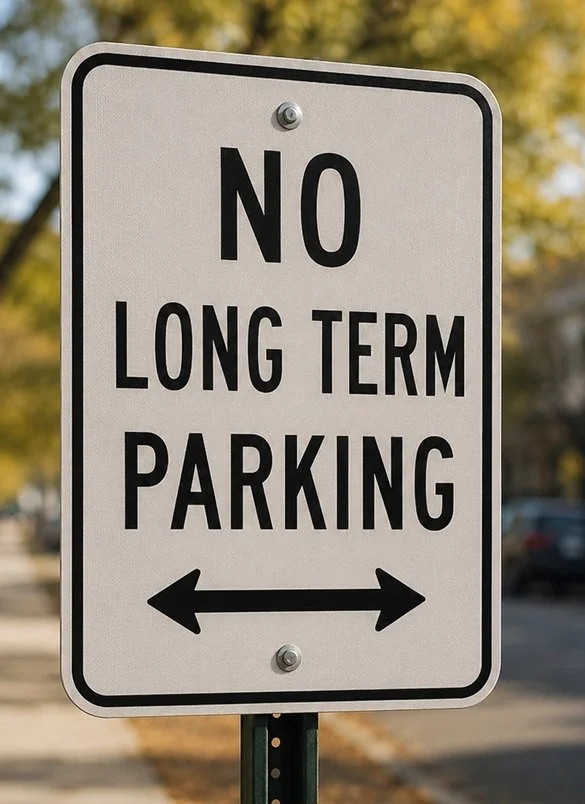
Most high-functioning couples have had some version of this moment. One of you starts to bring something up, and the other says, “Not right now,” or “Let’s talk about it later.”
And honestly, that’s not a bad instinct. In many cases, it is the right move. Pausing a conversation when the timing is off can actually protect your relationship.
But here is where it starts to cost you. Most couples do not have too many conflicts. They have too many unfinished ones. Many couples begin working on this pattern through the Renew process, where they learn how to come back to conversations in a way that actually moves things forward.
In couples work, we often talk about using a “parking lot.” It means recognizing that something important is coming up, but the timing is not right. You might be heading out the door, the kids are around, or one of you is too emotionally flooded to have a productive conversation.
So instead of pushing through and making things worse, you pause. You set it aside with the intention of coming back to it. That is not avoidance. It is a useful relationship skill. Taking a break in the moment can prevent a conversation from escalating in ways that are harder to repair later.
The issue is not the pause. It is what happens next.
“Later” comes and goes, and life fills the space. Work, kids, responsibilities, and exhaustion all compete for attention. The conversation that felt important in the moment starts to feel less urgent, or harder to bring up, or simply too big to know where to start.
So it does not get revisited at all. This is where resentment tends to build. Not because couples have conflict, but because the conflict never actually gets finished.
In many relationships, this dynamic is not evenly distributed. One partner tends to bring things up, while the other is more likely to delay or defer. In the moment, postponing can feel like keeping the peace. But over time, it often lands differently. What feels like “we will talk later” to one partner can feel like dismissal to the other.
Eventually, the pattern shifts. The more expressive partner may stop bringing things up altogether, or everything comes out at once after too much has built up. Neither outcome leads to real connection or productive conversation.
If you take one idea from this, let it be this: later is not a plan.
A parking lot only works if there is a clear return. Not a vague intention, but something specific. That might sound like agreeing to talk that evening, setting aside time over the weekend, or adding it to a regular check-in. Without that, it stops being a pause. It becomes storage. For couples who feel stuck in this cycle, a relationship intensive can create the structure and momentum needed to break out of long‑standing patterns.
This is where structure matters more than motivation. Many couples benefit from having a regular, protected time to reconnect. This creates a natural place for the conversations that got “parked” to be revisited.
In couples work, we often build toward this gradually. A simple starting point is a brief, consistent conversation focused on understanding each other’s day rather than solving problems. This helps couples stay emotionally connected, practice listening without interrupting, and keep track of each other’s internal world. That foundation makes it much easier to come back to harder conversations without them turning into the same argument again.
Research from the Gottman Method shows that many relationship problems are perpetual, meaning they do not fully go away. So the goal is not to eliminate conflict. It is to learn how to come back to it, work through it, and stay connected in the process.
Avoiding conflict in the moment can be helpful. Avoiding it indefinitely is what creates distance.
If something matters enough to bring up, it matters enough to come back to. Not immediately and not perfectly, but intentionally. If you’re preparing for marriage, Engage can help you build these habits early so conversations don’t get lost or avoided over time.
Relationships rarely break down because of one difficult conversation. More often, they break down because of the conversations that never get finished.
If you recognize this pattern, you are not alone. Most couples are not struggling because they have conflict, but because the conflict never actually gets finished.
The shift is not in avoiding difficult conversations, but in creating a way to come back to them so they can move forward instead of staying stuck.
About the Author
Kathryn "Kassie" Welch is a Resident in Marriage and Family Therapy providing online therapy to couples and individuals throughout Virginia and Florida. Her work is grounded in the Gottman Method, with additional training in trauma, betrayal recovery, and neurodivergent relationships. She helps couples move beyond repeating patterns, strengthen communication, and create relationships that become a source of support rather than another source of stress.
Learn more or schedule a consultation at EngageRenewTherapy.com.

Continue Reading…

Taking space during conflict can help, but only if couples also know how to come back together afterward.

By the time a couple is arguing, defending themselves, shutting down, or trying to prove a point, they have usually missed several warning signs along the way.
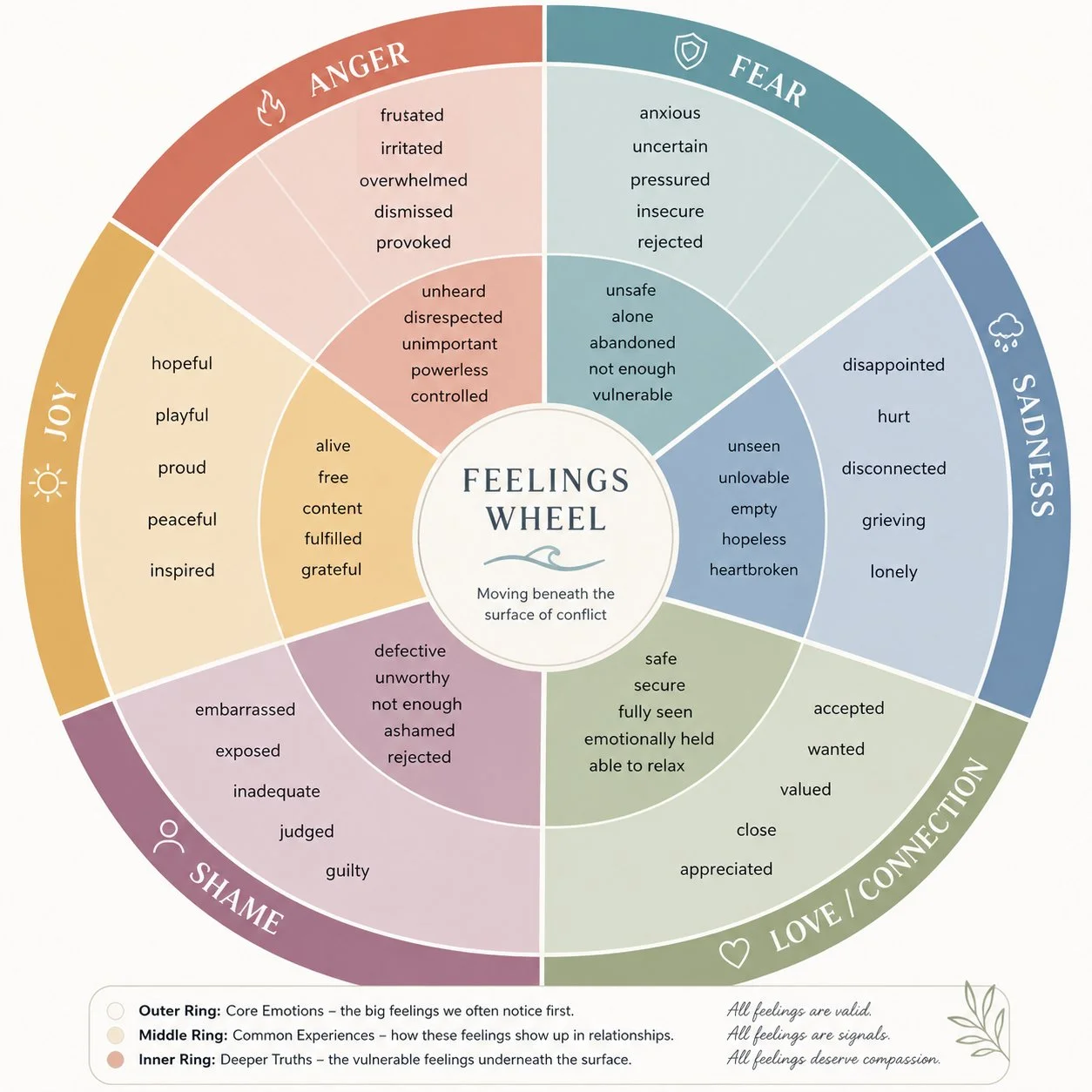
Learning to identify feelings is often like learning a new language. Many couples believe they are expressing emotions when they are actually expressing thoughts, interpretations, or conclusions about the other person’s behavior. This may seem like a small distinction, but it often changes the entire tone of a difficult conversation.