

Neurodivergent Couples
Different brains. One relationship.
Different brains don't need the same solutions. They need shared understanding and systems that help both partners succeed
Many neurodivergent couples love each other deeply but find themselves caught in patterns that leave both partners feeling misunderstood, overwhelmed, or alone. ADHD, autism, executive functioning differences, sensory needs, and emotional regulation challenges can all influence how partners communicate, manage daily responsibilities, and experience connection.
The goal isn't to think alike. It's to understand one another well enough to build a life that works for both of you.
You may be here because...
You keep having the same arguments.
One partner feels like they're carrying most of the mental load.
Forgotten tasks or missed details are interpreted as a lack of caring.
Small misunderstandings escalate quickly.
One partner feels criticized while the other feels alone.
You're exhausted from trying harder without seeing lasting change.
Neither of you set out to hurt the other.
Many neurodivergent couples become caught in patterns that neither partner fully understands. The problem is rarely that one person cares more than the other. More often, each partner is experiencing the relationship through a different lens.

One of the biggest shifts I help couples make is moving away from asking,
"Who's right?"
and becoming curious about,
"What's happening between us?"
Rather than focusing on blame, we work to understand how each partner experiences the relationship, where misunderstandings develop, and how differences in communication, executive functioning, sensory processing, and emotional regulation influence the patterns between you.
Therapy isn't about pretending the challenges don't exist. It's about understanding them well enough to build systems that actually work.
Instead of dividing against each other, we learn to divide and conquer life together.
My Approach
Working With Your Strengths
Every relationship has strengths.
Neurodivergent relationships often flourish when couples stop expecting both partners to approach life in exactly the same way and instead begin intentionally using each person's unique abilities.
Rather than asking,
"Who should be doing this?"
we begin asking,
"Who is best equipped for this?"
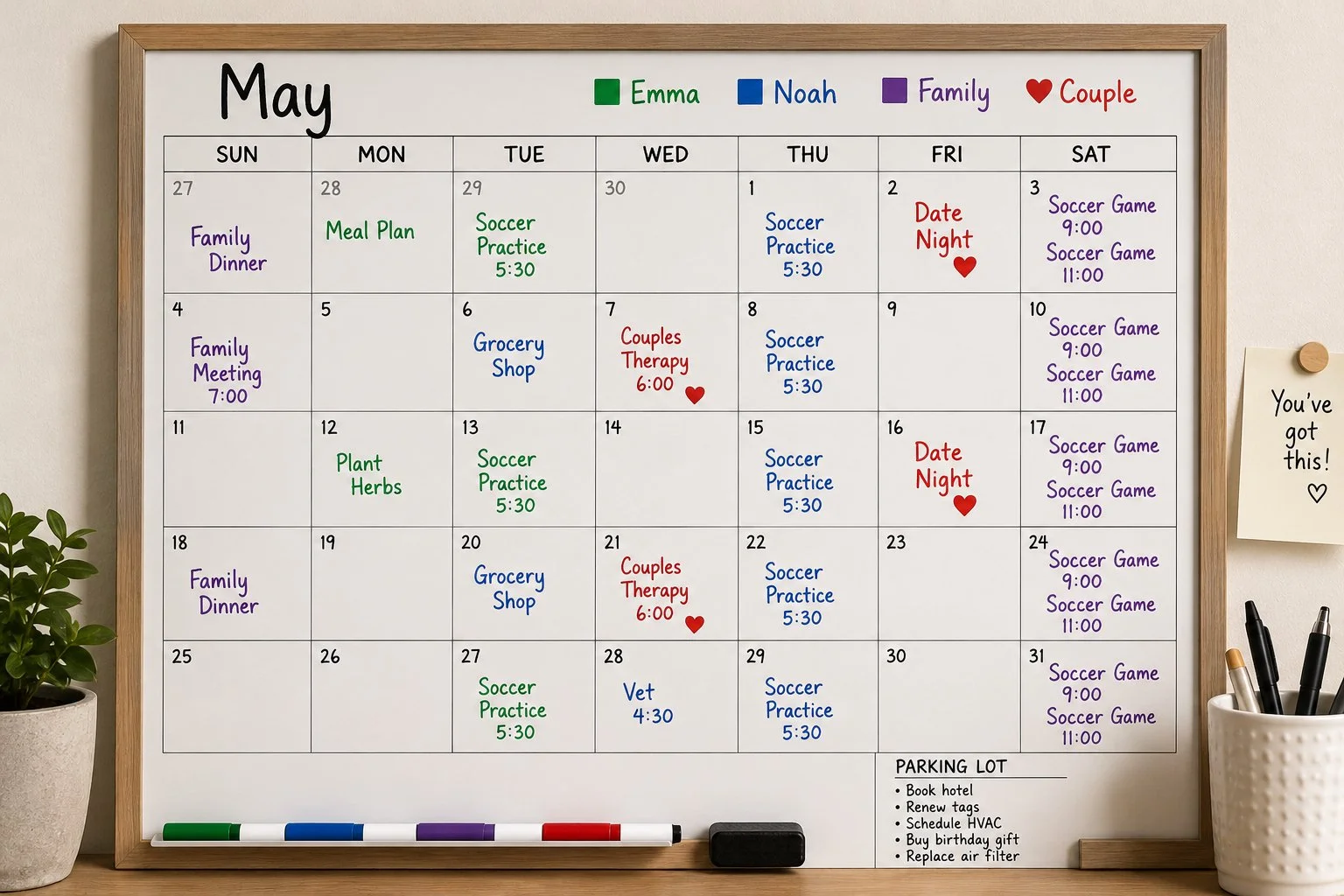
Sometimes one partner is naturally better at planning while the other excels at following through. One may enjoy researching vacations while the other loves creating memorable experiences. One may handle meal planning while the other grocery shops. Healthy relationships aren't built by keeping score. They're built by understanding each other's strengths, supporting each other's challenges, and creating systems that allow both people, and the relationship, to thrive.
Want to learn more?
Discover how understanding neurodivergent relationship dynamics can reduce conflict, strengthen communication, and help you build practical systems that support both partners.
Ready to Work Together?
Whether you're newly recognizing neurodivergence in your relationship or you've understood it for years, therapy can help you move from frustration and misunderstanding toward greater clarity, connection, and teamwork.