

Blog

When Both Partners Are Hurting: Breaking the Cycle in a High-Conflict Marriage
One of the hardest things about healing a marriage after years of hurt is that there often isn't one person who has been hurt and one person who did the hurting. Sometimes there are two people who have been hurting each other, and hurting themselves trying not to be hurt again.

The Good-Enough Partner
We all know we're not perfect. Most of us would readily admit that we make mistakes, lose patience, and occasionally behave in ways we're not particularly proud of. And yet, when our partner gets something wrong, it can be surprisingly difficult to extend that same understanding to them.
We want to be loved as imperfect human beings. Can we offer our partner the same grace?

Understanding Is the Cost of Being Understood
Most people enter difficult conversations hoping to be understood. We want our partner to understand why something hurt, why we reacted the way we did, or why something matters so much to us. The problem is that our partner often enters the same conversation wanting exactly the same thing. That can leave two people sitting across from one another, each trying harder and harder to explain themselves while neither feels heard.

The Myth of Arrival
Most of us have been taught to think about growth as a destination. Once I heal. Once I find the right partner. Once I lose the weight. Once I get the promotion. Once I retire. Then I'll arrive. The same belief often finds its way into our relationships. Once we get married. Once we buy a house. Once the kids are older. Once work settles down. Once we're out of debt. Then things will finally be easier. There is comfort in believing there is a finish line. Arrival promises relief. If we just work hard enough, perhaps one day we can finally exhale and enjoy the life or relationship we've worked so hard to build.

It's Never About the Pen
Our big beautiful brains are designed to make quick judgments. When information is missing, we instinctively fill in the blanks using our own experiences, fears, values, and expectations because our brains are designed to protect us. That ability helps us navigate the world efficiently, but it can become a liability in close relationships.

Relationships Are Not About Seeing Through Each Other, But Seeing Each Other Through
The real measure of a relationship is not whether conflict exists. It is whether, when life becomes difficult, you have someone willing to stand beside you—someone who is more interested in understanding than winning and who remembers that the relationship is worth protecting.

Most Relationship Fights Start Long Before the Argument
By the time a couple is arguing, defending themselves, shutting down, or trying to prove a point, they have usually missed several warning signs along the way. Many couples begin learning to recognize these early signals through the Renew process where they practice slowing down and staying connected before conflict takes over.
Why “I Feel Like” Is Not Actually a Feeling
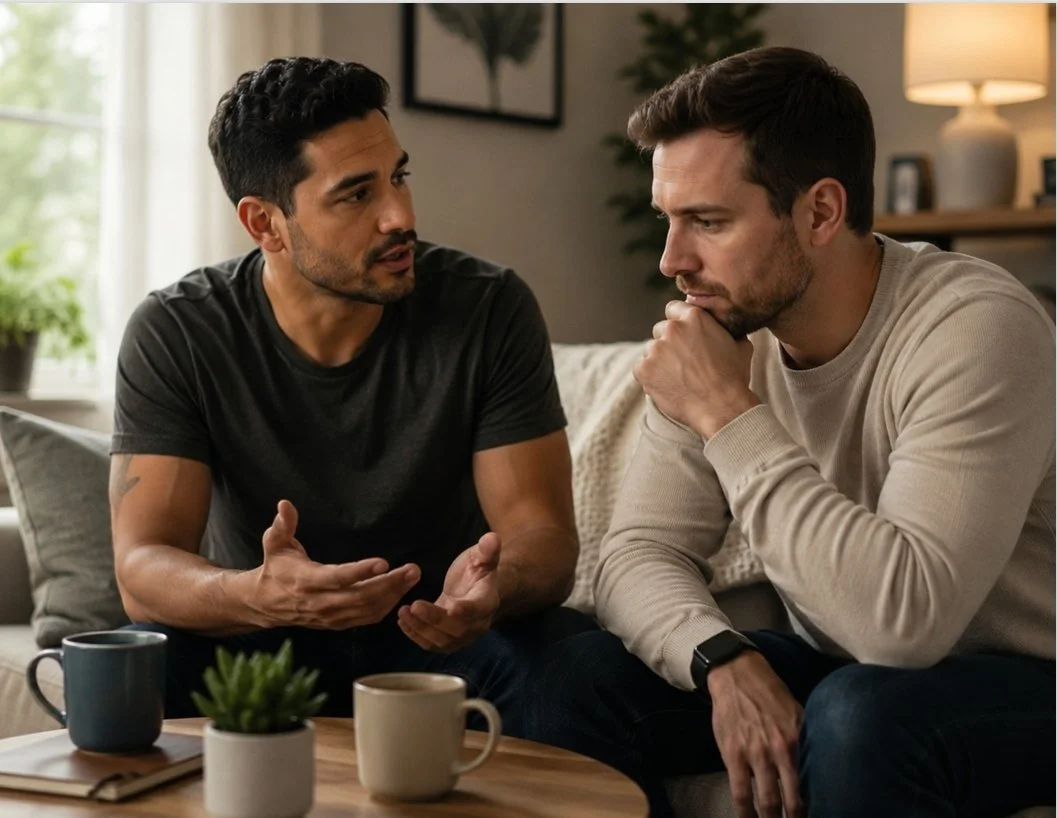
Many couples believe they are expressing emotions when they are actually expressing thoughts, interpretations, or conclusions about the other person’s behavior. This may seem like a small distinction, but it often changes the entire tone of a difficult conversation.

How to Come Back to the Conversation (Without It Turning Into the Same Fight)
One of the biggest mistakes couples make is trying to restart the conversation too soon. When emotions are still elevated, the nervous system often interprets even neutral comments as criticism, rejection, or threat. Conversations speed up. Defensiveness increases. Listening decreases.
Why “We’ll Talk Later” Is Hurting Your Relationship
In couples work, we often talk about using a “parking lot.” It means recognizing that something important is coming up, but the timing is not right. You might be heading out the door, the kids are around, or one of you is too emotionally flooded to have a productive conversation.

Why Couples Keep Having the Same Fight
You’re in the middle of a conversation that’s going nowhere, and at some point you realize you’ve been here before. It probably started about something small. It usually does. But then the pace changes. One of you is trying to be heard, the other is pulling back or shutting down, and the more you both try to get somewhere, the faster it all moves.